Journal article
Nature Climate Change · 2026-02 · Volume 16 · Issue 2 · pp. 148-154
DOI: 10.1038/s41558-025-02534-4
Published online: 2026-01-09 · Download citation (BibTeX)
Abstract
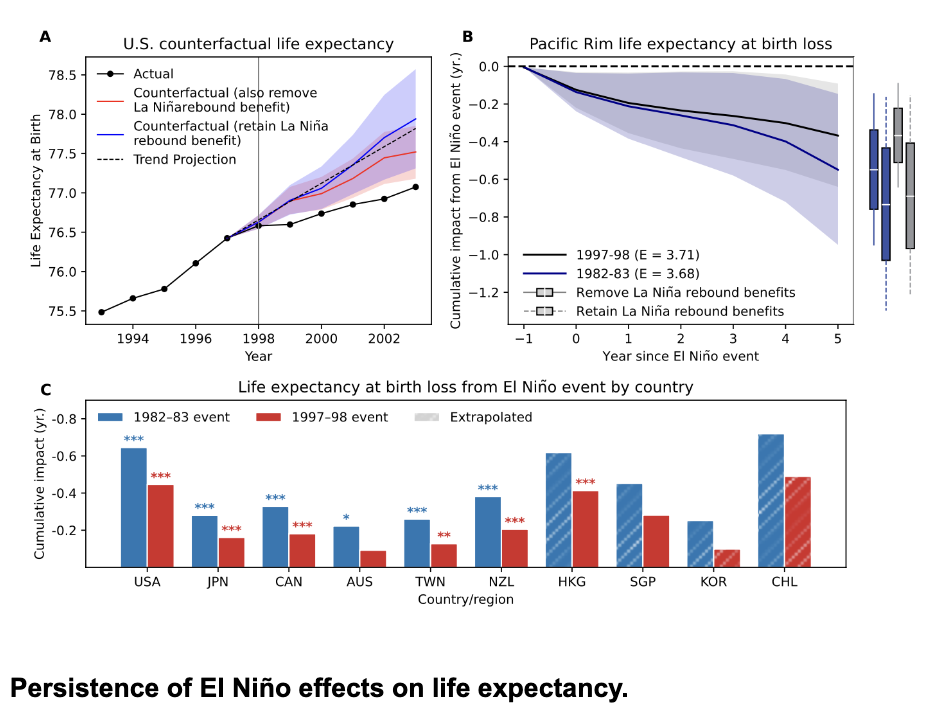
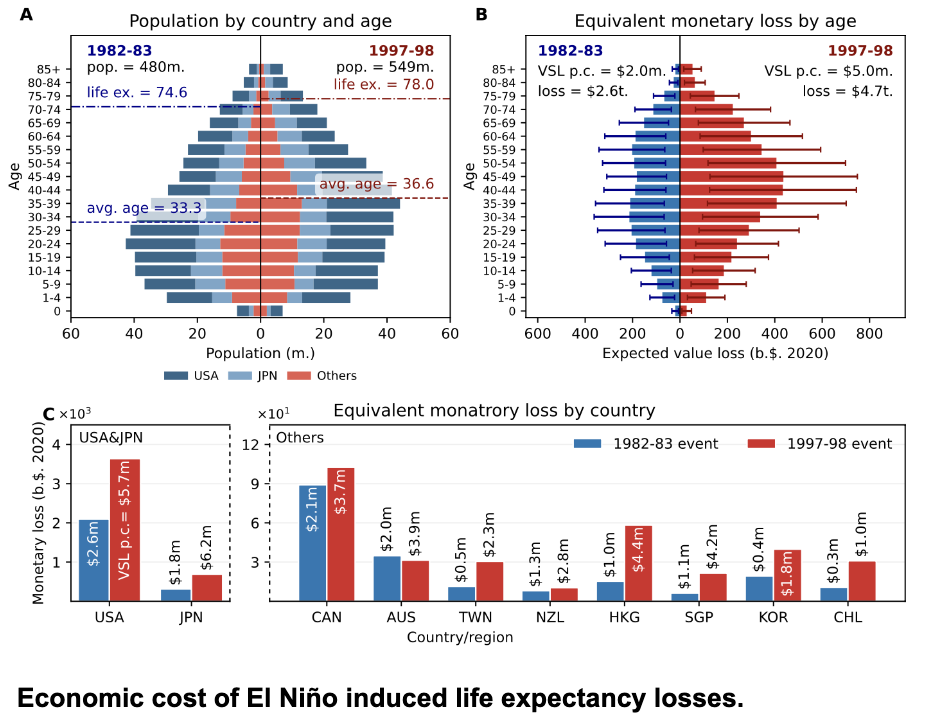
The El Niño–Southern Oscillation (ENSO) is a major driver of global climate variability, yet its long-term effect on life expectancy remains unclear. Here, we quantify how ENSO persistently impedes mortality improvement, leading to considerable life expectancy and economic losses across high-income Pacific Rim countries. We estimate life expectancy losses of 0.5 years (monetary equivalent loss of $2.6 trillion) for the 1982–83 El Niño and 0.4 years ($4.7 trillion) for the 1997–98 event. Climate projections under moderate emission pathways suggest a cumulative decline of 2.8 years in life expectancy by 2100, amounting to $35 trillion losses, with most of the monetary burden falling on the middle-aged population. These findings reveal that intensifying ENSO variability poses an underrecognized and enduring threat to human health and socioeconomic stability, underscoring the urgent need for targeted adaptation strategies to safeguard population well-being.
Related material